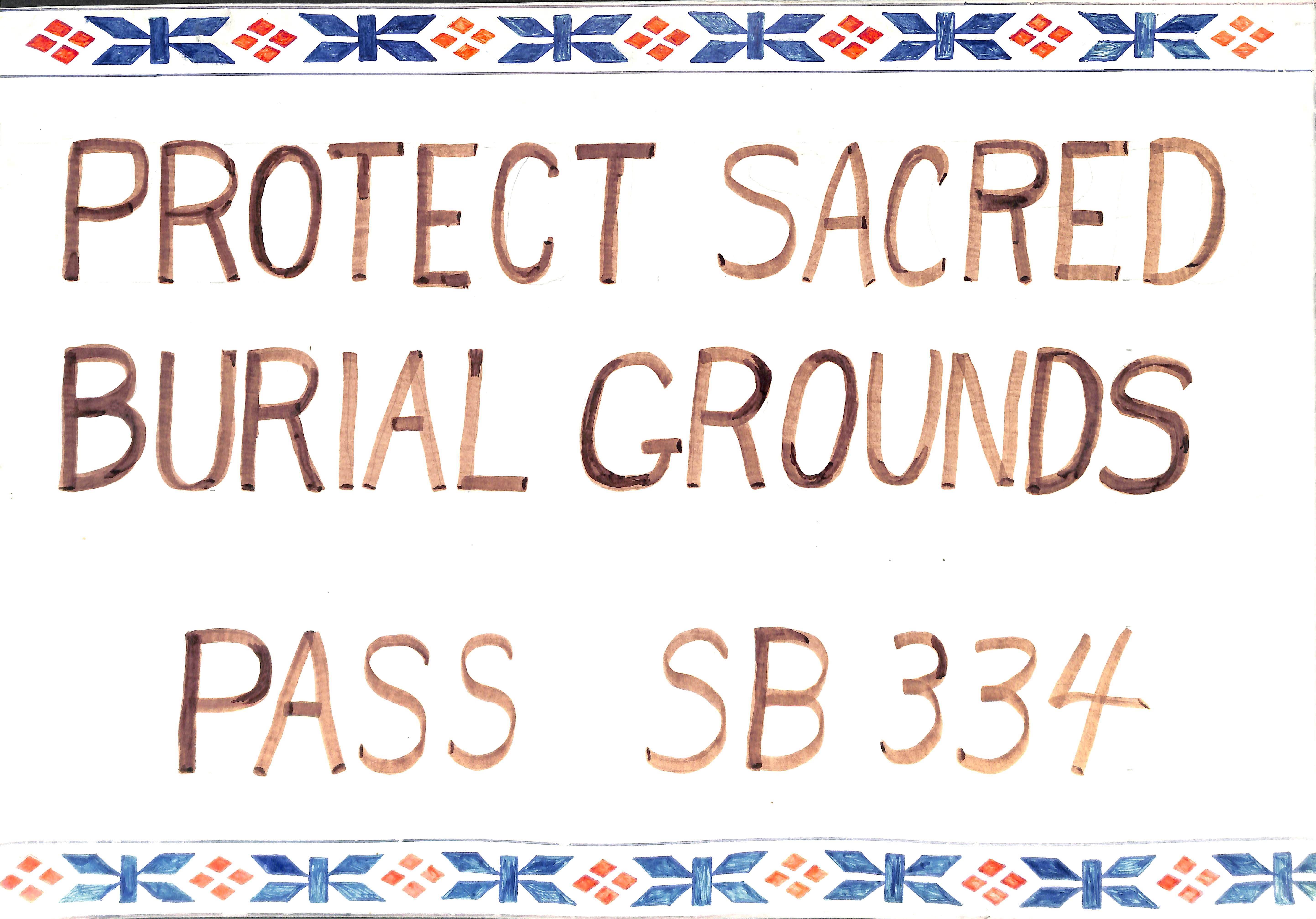
Graves Protection and Repatriation
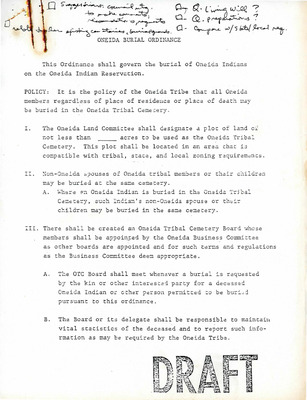
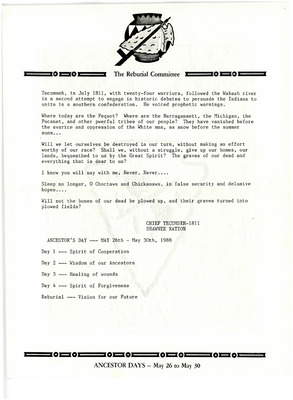
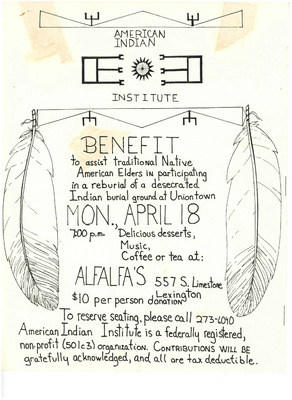
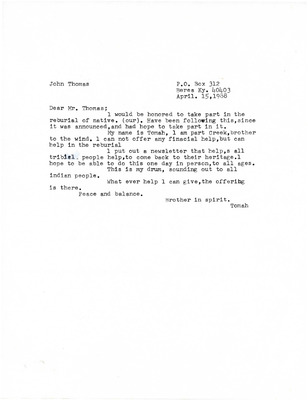
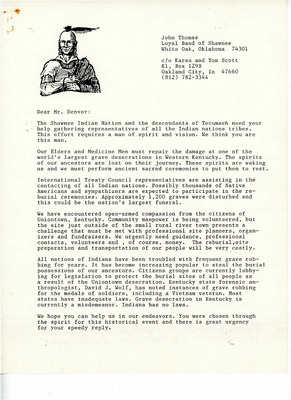
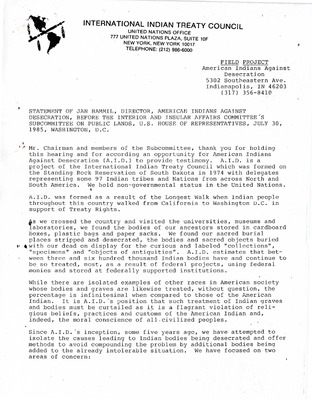
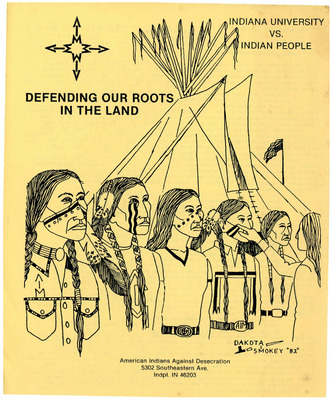
Most of the items in this collection are related to the mass desecration and looting of Shawnee Indian graves in Uniontown, Kentucky. An estimated 1200 graves were disturbed in this incident, prompting legislation that changed the desecration offense from a misdemeanor to a felony. John Thomas, as a member of the International Indian Treaty Council, worked to raise funds for reburial efforts and conducted purification ceremonies for the Ancestors Days reburial event held in May, 1988. Items are on loan to Ursinus College as part of the Welcome Home Project.
Special thanks to Ursinus College students Katherine Slater, Class of 2026, and Seamus Clune, Class of 2027, for their assistance with organization, research, digitization and description of these items.
-
Emergency Desecration Act of the General Assembly of Kentucky
General Assembly
This three-page typed document, circa 1988, is an Act by the General Assembly of the Commonwealth of Kentucky regarding grave desecration. The Act has four sections; the first section labels the intentional excavation of human remains as a first-degree offense. Section two classifies offenses related to the desecration of venerated objects. Section three classifies the abuse of a corpse as a class D felony. Section four contextualizes the revised penalties and emergency nature of the Act in relation to ongoing grave robberies in Kentucky.
-
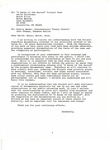
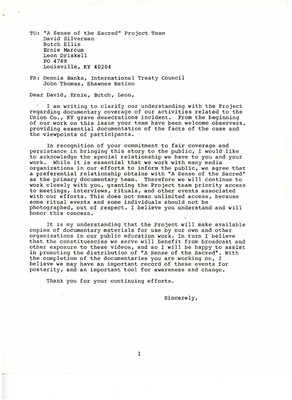
Draft Letter from Dennis Banks and John Thomas to “A Sense of the Sacred” Project Team
Dennis Banks and John Thomas
This two-page typed draft letter from Dennis Banks and John Thomas to "A Sense of the Sacred" Project Team was created circa 1988. The letter concerns a documentary project on the Indian grave desecrations in Union County, Kentucky. Banks and Thomas agree to work cooperatively and give priority access to the documentary crew for interviews and other events, but note that some rituals and individuals should not be photographed.
-
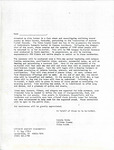
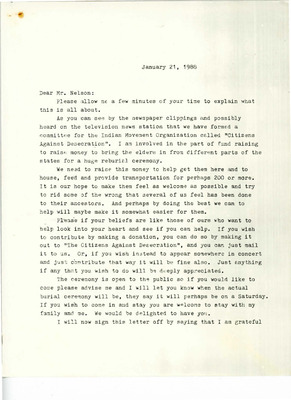
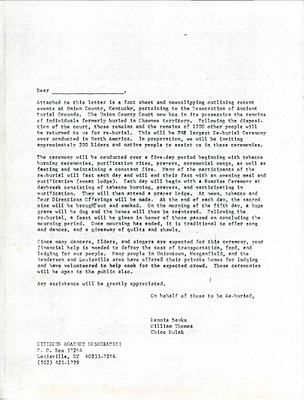
Citizens Against Desecration Form Letter, 1988
Dennis Banks, William Thomas, and Chico Dulak
This one-page typed photocopied form letter from Citizens Against Desecration was created in 1988 to inform residents about the desecration of American Indian burial grounds in Union County, Kentucky. The letter provides details about the planned five-day reburial ceremony (the largest ever conducted in North America) including tobacco burning, prayers, songs and fasting. The letter requests financial help to cover food, transportation and lodging costs for those expected to attend.
-
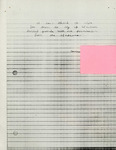
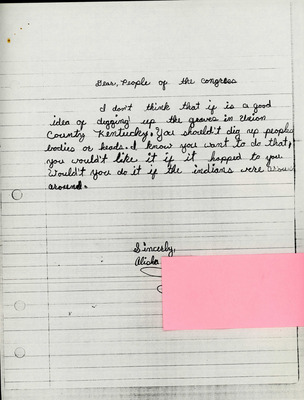
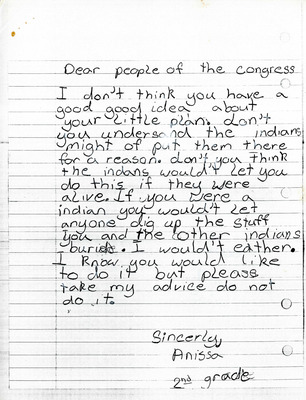
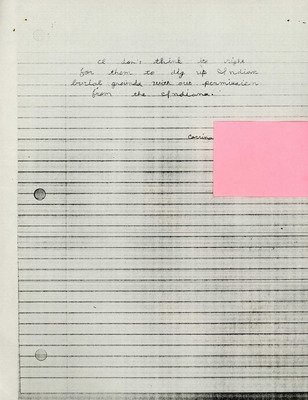
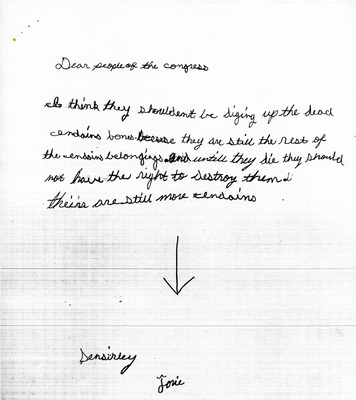
Letter from Carrina to Congress
Carrina
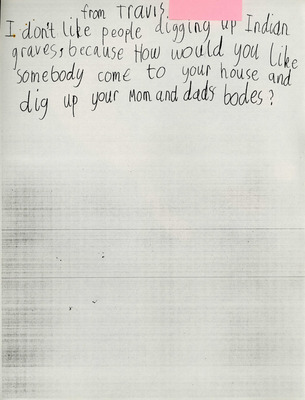
This handwritten letter, circa 1988, from a student to members of Congress, is regarding the Union County, Kentucky, grave desecration. This is one of dozens of similar letters sent to Congress as part of a campaign to influence tougher legislation on the looting of burial sites.
-
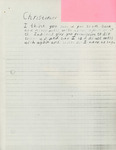
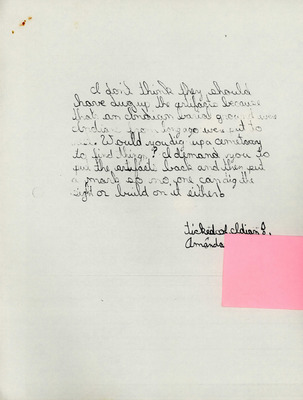
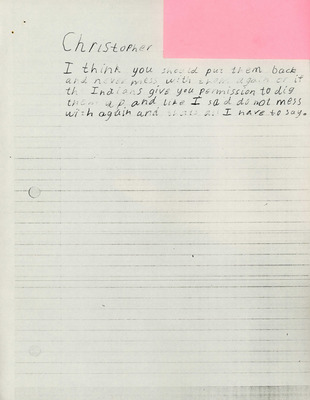
Letter from Christopher to Congress
Christopher
This handwritten letter, circa 1988, from a student to members of Congress, is regarding the Union County, Kentucky, grave desecration. This is one of dozens of similar letters sent to Congress as part of a campaign to influence tougher legislation on the looting of burial sites.
-
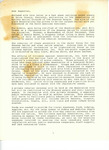
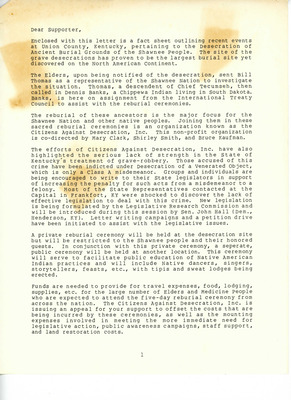
Letter and Fact Sheet from Citizens Against Desecration
Mary H. Clark, Shirley Smith, and Bruce Kaufman
This three-page typed letter from Citizens Against Desecration, circa March 1988, is addressed to supporters and gives facts about the events at Union County, Kentucky, regarding the desecration of American Indian burial sites. The letter provides facts surrounding the incident and notes the need to both educate the public about the issue and change legislation to increase the penalties for those convicted of this crime. It also expresses the need for funding to help cover the cost of expenses related to the reburial efforts.
-
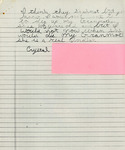
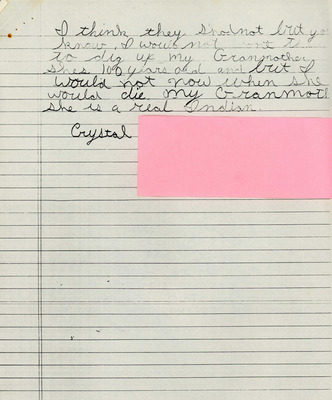
Letter from Crystal to Congress
Crystal
This handwritten letter, circa 1988, from a student to members of Congress, is regarding the Union County, Kentucky, grave desecration. This is one of dozens of similar letters sent to Congress as part of a campaign to influence tougher legislation on the looting of burial sites.
-
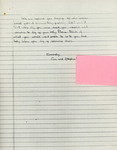
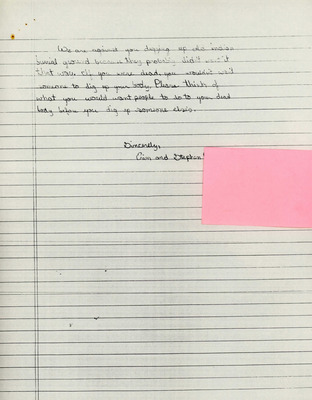
Letter from Erin and Stephen to Congress
Erin and Stephen
This handwritten letter, circa 1988, from two students to members of Congress, is regarding the Union County, Kentucky, grave desecration. This is one of dozens of similar letters sent to Congress as part of a campaign to influence tougher legislation on the looting of burial sites.
-
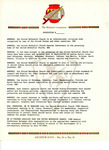
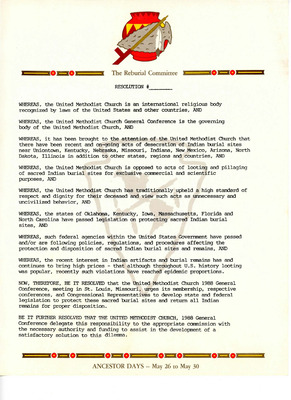
United Methodist Church Resolution on the Desecration of Burial Sites, 1988
United Methodist Church General Conference
This one-page typed document is a draft resolution from the United Methodist Church General Conference, dated 1988. The Conference notes their opposition to the desecration of indigenous graves and urges members and Congressional representatives to pass better legislation to address this problem in the future.
-
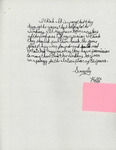
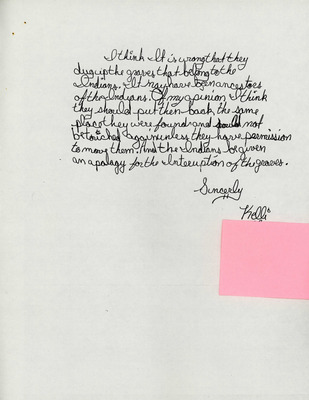
Letter from Kelli to Congress
Kelli
This handwritten letter, circa 1988, from a student to members of Congress, is regarding the Union County, Kentucky, grave desecration. This is one of dozens of similar letters sent to Congress as part of a campaign to influence tougher legislation on the looting of burial sites.
-
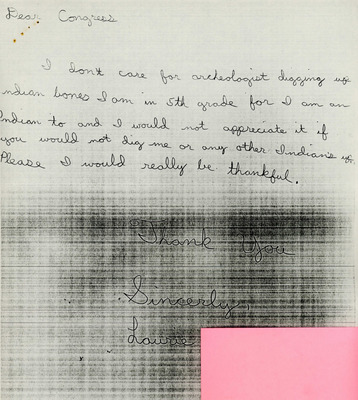
Letter from Laurie to Congress
Laurie
This handwritten letter, circa 1988, from a student to members of Congress, is regarding the Union County, Kentucky, grave desecration. This is one of dozens of similar letters sent to Congress as part of a campaign to influence tougher legislation on the looting of burial sites.
-
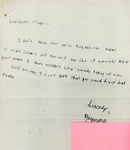
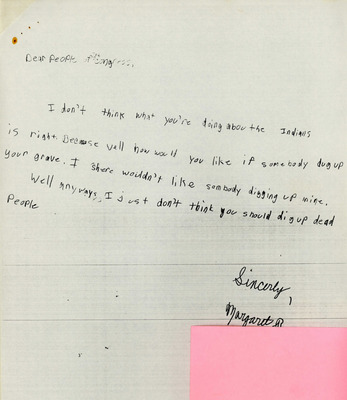
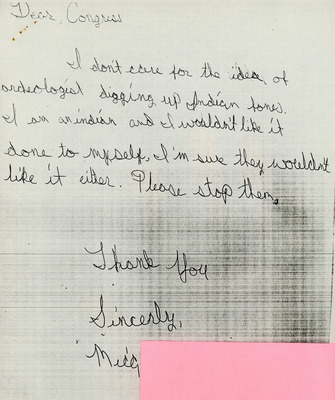
Letter from Margaret to Congress
Margaret
This handwritten letter, circa 1988, from a student to members of Congress, is regarding the Union County, Kentucky, grave desecration. This is one of dozens of similar letters sent to Congress as part of a campaign to influence tougher legislation on the looting of burial sites.
-
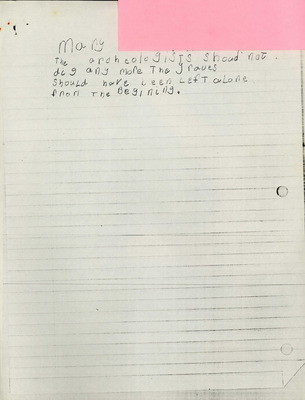
Letter from Mary to Congress
Mary
This handwritten letter, circa 1988, from a student to members of Congress, is regarding the Union County, Kentucky, grave desecration. This is one of dozens of similar letters sent to Congress as part of a campaign to influence tougher legislation on the looting of burial sites.
-
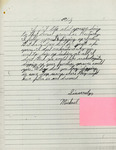
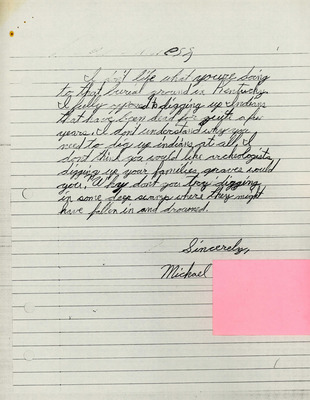
Letter from Michael to Congress
Michael
This handwritten letter, circa 1988, from a student to members of Congress, is regarding the Union County, Kentucky, grave desecration. This is one of dozens of similar letters sent to Congress as part of a campaign to influence tougher legislation on the looting of burial sites.
-
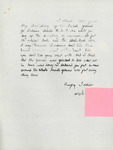
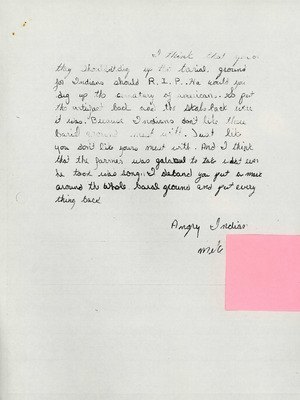
Letter from Mike to Congress
Mike
This handwritten letter, circa 1988, from a student to members of Congress, is regarding the Union County, Kentucky, grave desecration. This is one of dozens of similar letters sent to Congress as part of a campaign to influence tougher legislation on the looting of burial sites.
-
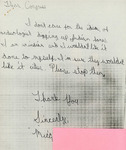
Letter from Milly to Congress
Milly
This handwritten letter, circa 1988, from a student to members of Congress, is regarding the Union County, Kentucky, grave desecration. This is one of dozens of similar letters sent to Congress as part of a campaign to influence tougher legislation on the looting of burial sites.
-
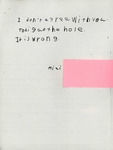
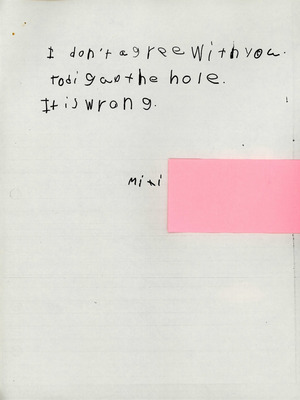
Letter from Mixi to Congress
Mixi
This handwritten letter, circa 1988, from a student to members of Congress, is regarding the Union County, Kentucky, grave desecration. This is one of dozens of similar letters sent to Congress as part of a campaign to influence tougher legislation on the looting of burial sites.
-
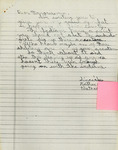
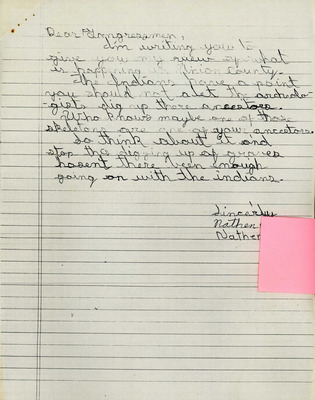
Letter from Nathen to Congress
Nathen
This handwritten letter, circa 1988, from a student to members of Congress, is regarding the Union County, Kentucky, grave desecration. This is one of dozens of similar letters sent to Congress as part of a campaign to influence tougher legislation on the looting of burial sites.
-
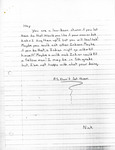
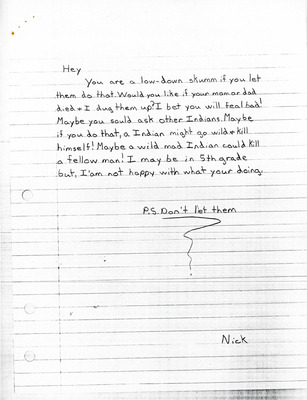
Letter from Nick to Congress
Nick
This handwritten letter, circa 1988, from a student to members of Congress, is regarding the Union County, Kentucky, grave desecration. This is one of dozens of similar letters sent to Congress as part of a campaign to influence tougher legislation on the looting of burial sites.
-
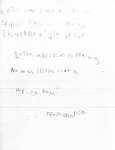
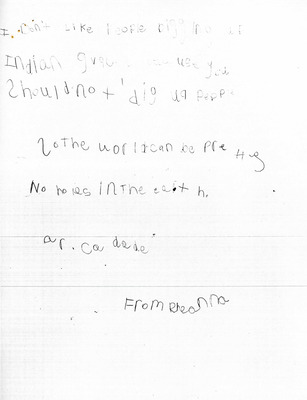
Letter from Rheanna to Congress
Rheanna
This handwritten letter, circa 1988, from a student to members of Congress, is regarding the Union County, Kentucky, grave desecration. This is one of dozens of similar letters sent to Congress as part of a campaign to influence tougher legislation on the looting of burial sites.
-
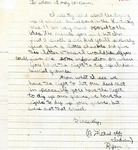
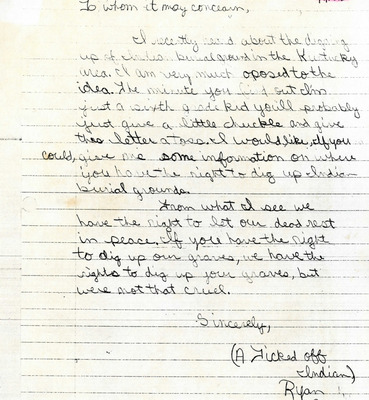
Letter from Ryan to Congress
Ryan
This handwritten letter, circa 1988, from a student to members of Congress, is regarding the Union County, Kentucky, grave desecration. This is one of dozens of similar letters sent to Congress as part of a campaign to influence tougher legislation on the looting of burial sites.
-
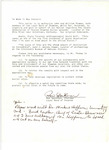
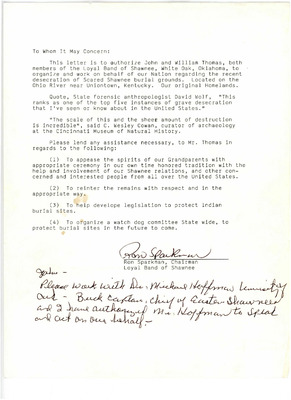
Shawnee Authorization Letter for John and William Thomas
Ron Sparkman
This typed letter, circa 1988, provides authorization for John and William Thomas to work on behalf of the Shawnee Nation to reinter ancestral remains from disturbed burial grounds near Uniontown, Kentucky. The letter seeks assistance for the Thomases in their tasks and asks to help develop legislation to protect Indian burial sites in the future.
A handwritten note appears at the bottom of the document.
-
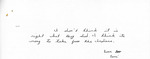
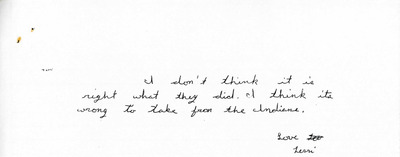
Letter from Terri to Congress
Terri
This handwritten letter, circa 1988, from a student to members of Congress, is regarding the Union County, Kentucky, grave desecration. This is one of dozens of similar letters sent to Congress as part of a campaign to influence tougher legislation on the looting of burial sites.
-
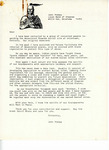
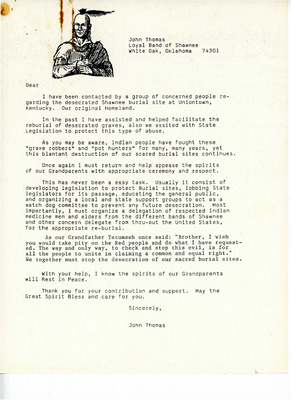
Form Letter from John Thomas Regarding Desecration of a Shawnee Burial Site at Uniontown, Kentucky
John Thomas
This typed letter from John Thomas, circa March 1988, is an appeal for help raising funds to support reburial efforts in Uniontown, Kentucky. Thomas recounts his previous experience helping with reburials and legislative efforts to prevent further grave desecration from happening. John explains that a delegation of Shawnee medicine men and elders needs to be organized for an appropriate re-burial.
-
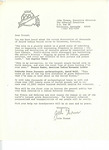
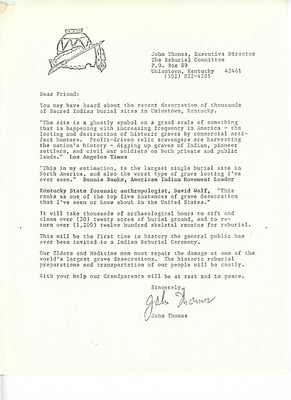
Form Letter from John Thomas Regarding Desecration of Burial Sites in Uniontown, Kentucky
John Thomas
This one-page typed letter, circa March 1988, was written by John Thomas regarding the desecration of Indian graves in Uniontown, Kentucky. The letter includes quotations from the Los Angeles Times, AIM leader Dennis Banks, and anthropologist David Wolf attesting to the magnitude of the destruction. The letter appeals for funds to help with the various costs associated with the reburial ceremony.