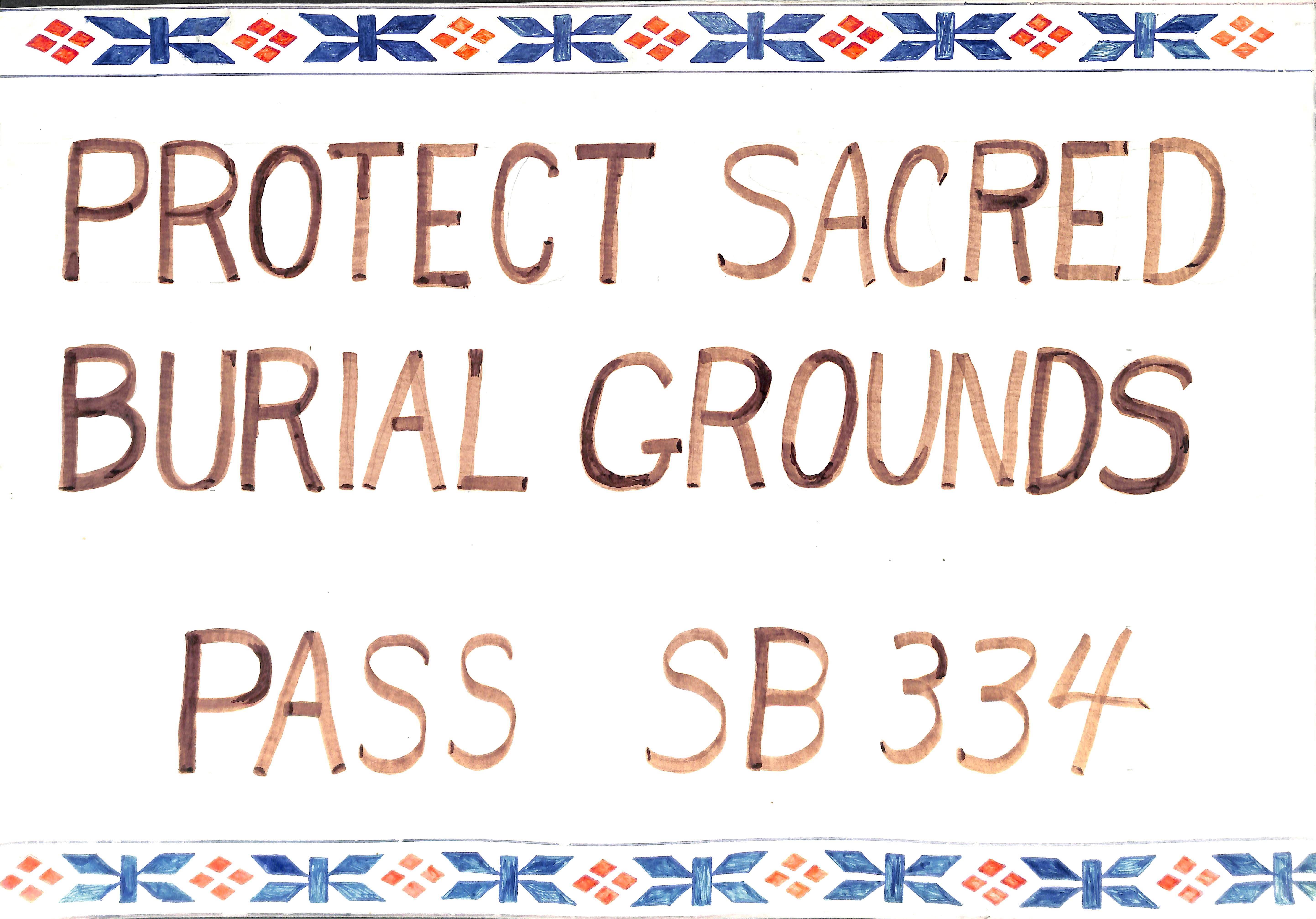
Graves Protection and Repatriation
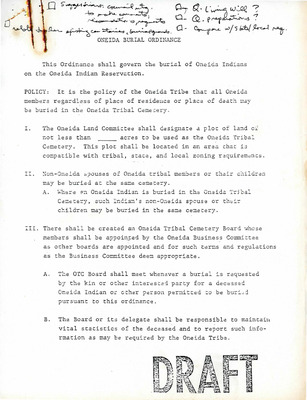
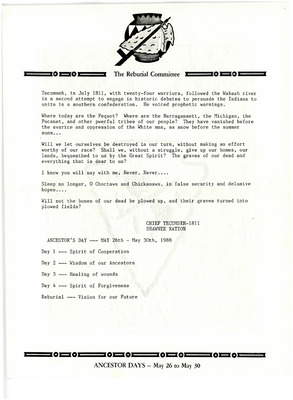
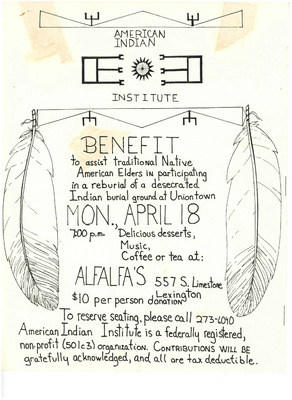
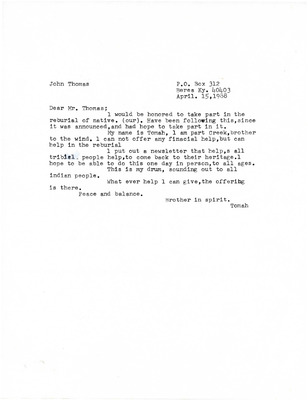
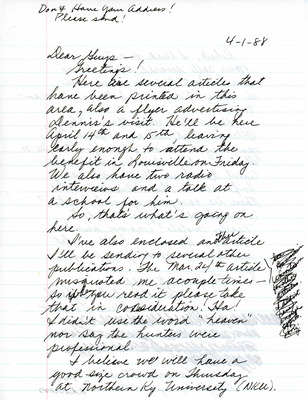
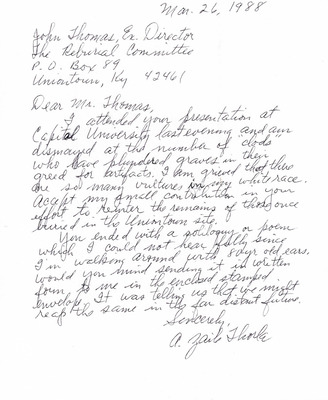
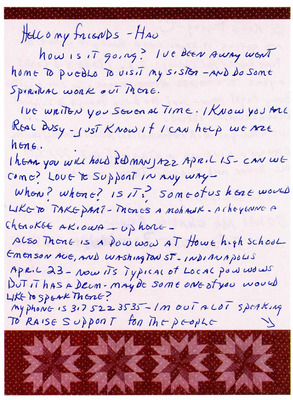
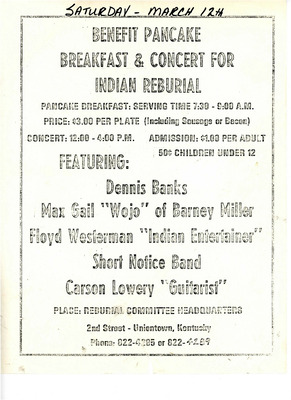
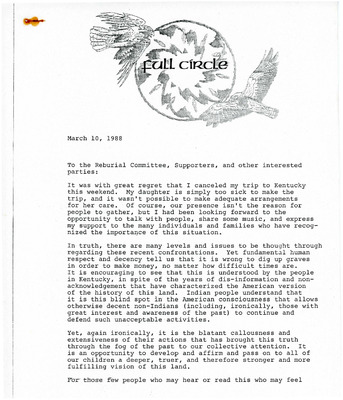
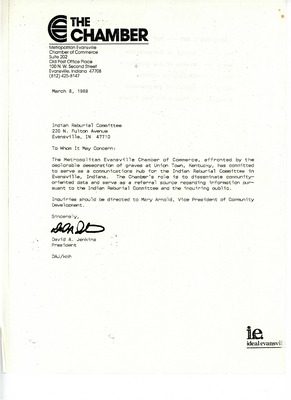
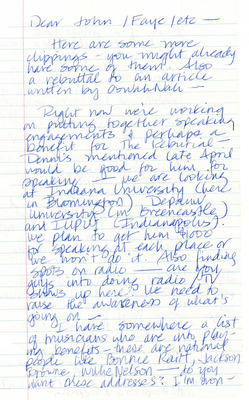
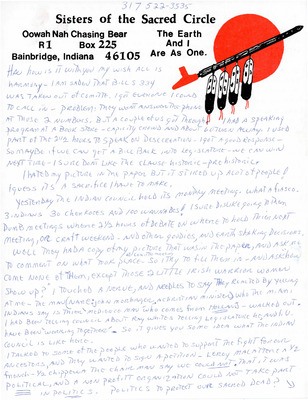
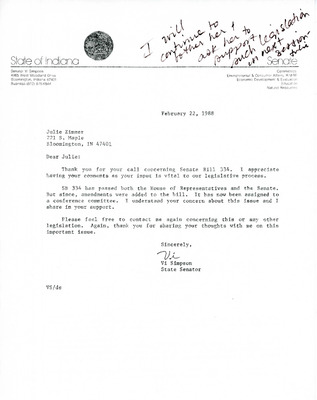
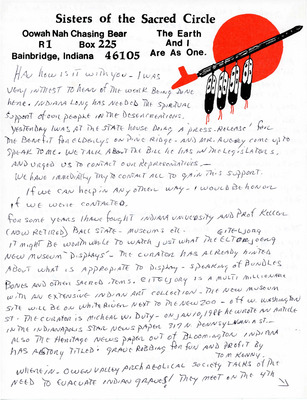
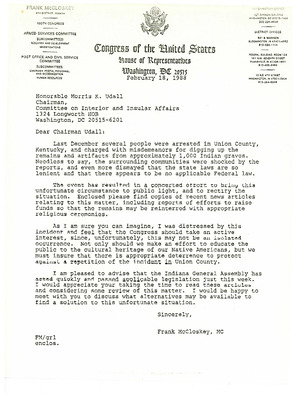
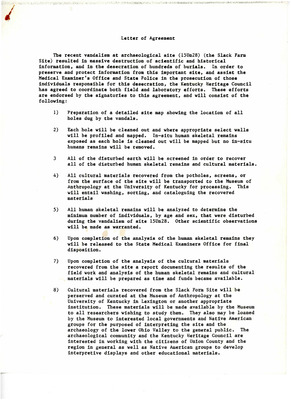
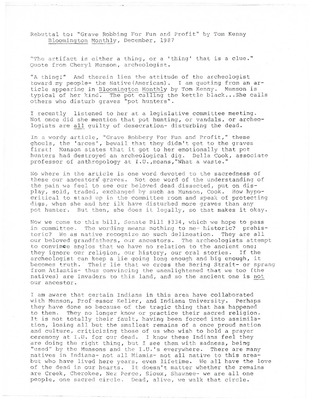
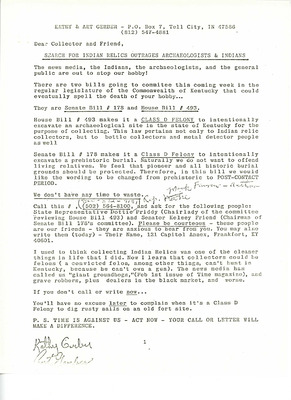
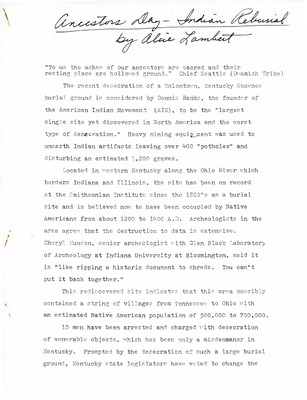
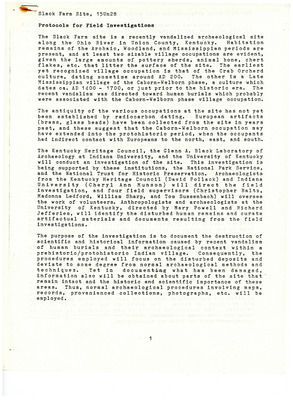
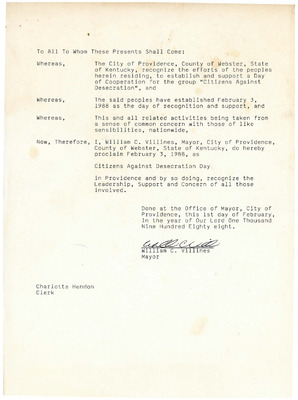
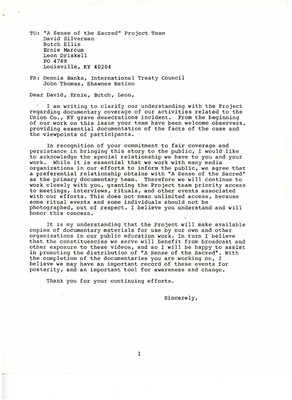
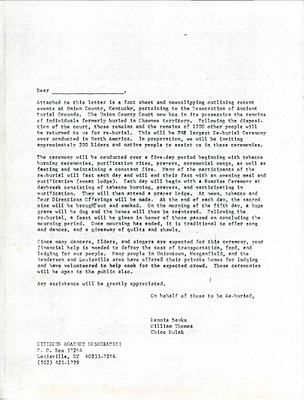
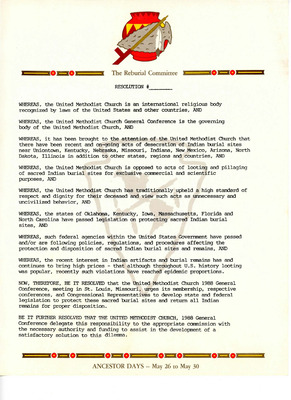
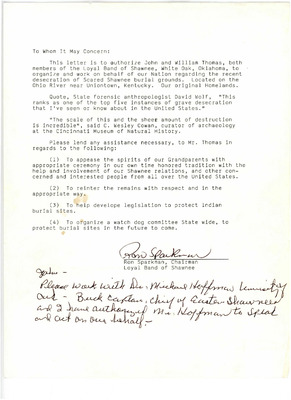
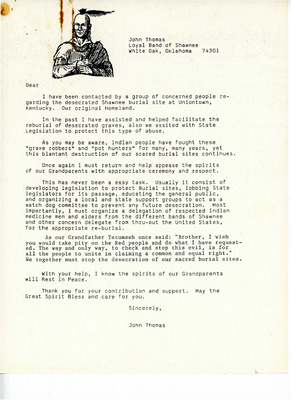
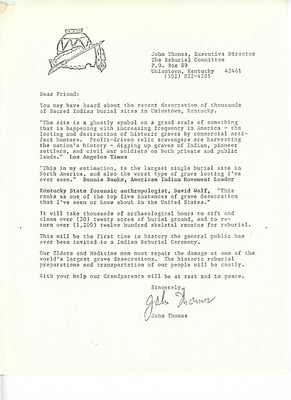
Most of the items in this collection are related to the mass desecration and looting of Shawnee Indian graves in Uniontown, Kentucky. An estimated 1200 graves were disturbed in this incident, prompting legislation that changed the desecration offense from a misdemeanor to a felony. John Thomas, as a member of the International Indian Treaty Council, worked to raise funds for reburial efforts and conducted purification ceremonies for the Ancestors Days reburial event held in May, 1988. Items are on loan to Ursinus College as part of the Welcome Home Project.
Special thanks to Ursinus College students Katherine Slater, Class of 2026, and Seamus Clune, Class of 2027, for their assistance with organization, research, digitization and description of these items.
-
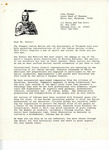
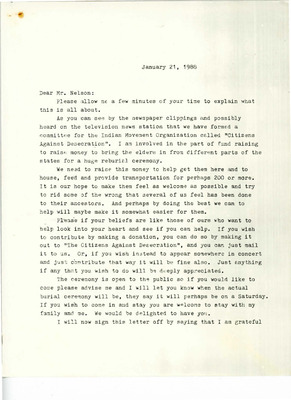
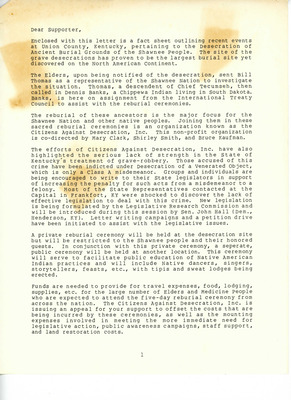
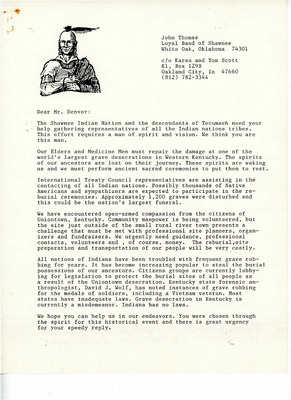
Letter from John Thomas to John Denver, 1988
John Thomas
This two-page typed letter from Shawnee representative John Thomas to Mr. Denver (presumably John Denver) was sent circa March 1988. Thomas explains the unprecedented extent of the damage done to Indian graves at Uniontown, Kentucky, and the need for support for the thousands of Native Americans planning to participate in the reburial ceremonies. Thomas also discusses the increased popularity of grave robbing and the need for improved legislation to address the issue.
-
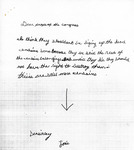
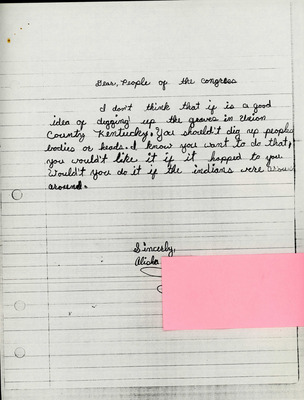
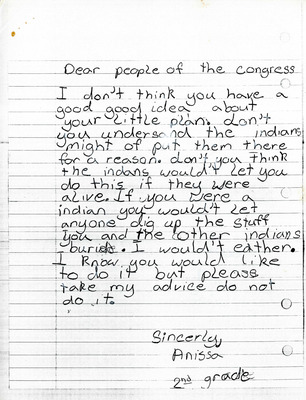
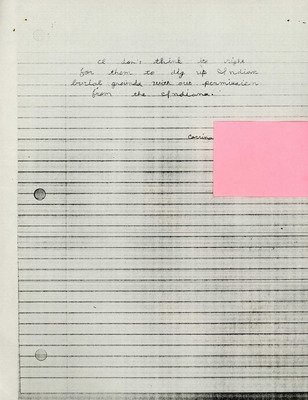
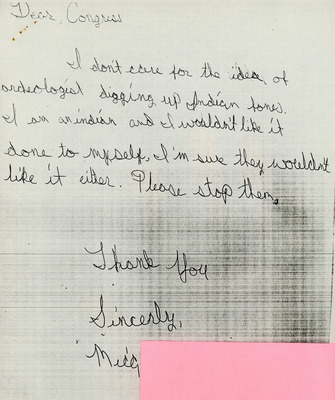
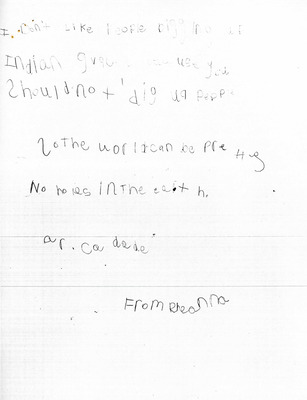
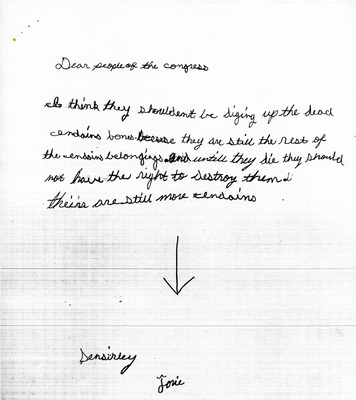
Letter from Torie to Congress
Torie
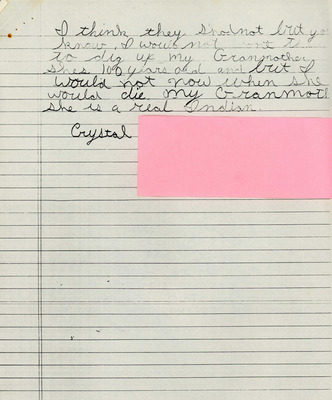
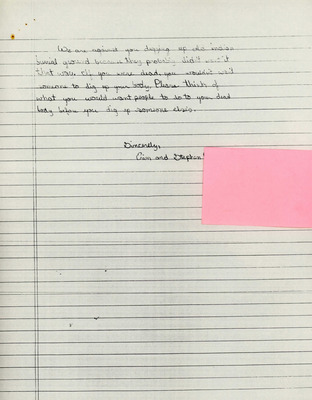
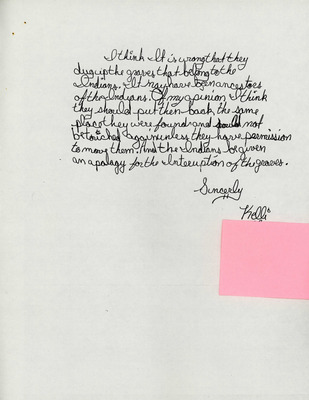
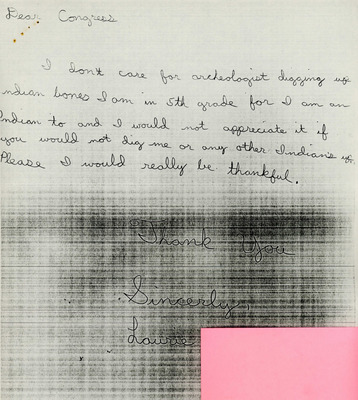
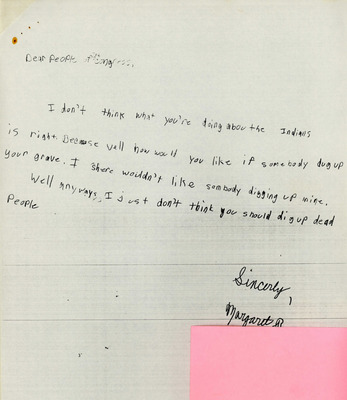
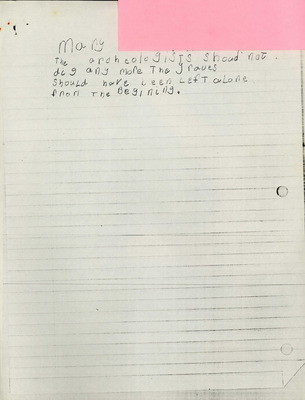
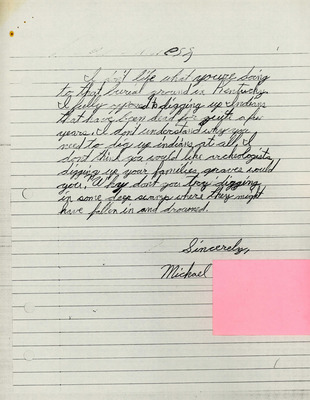
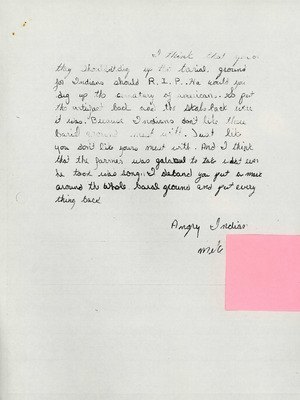
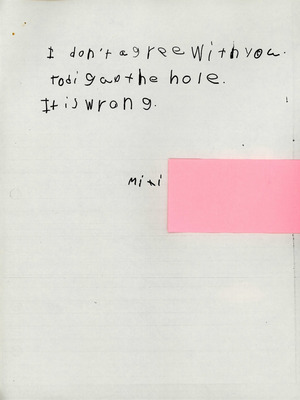
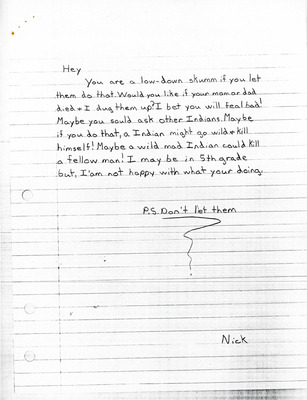
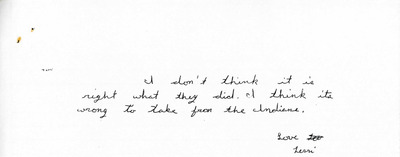
This handwritten letter, circa 1988, from a student to members of Congress, is regarding the Union County, Kentucky, grave desecration. This is one of dozens of similar letters sent to Congress as part of a campaign to influence tougher legislation on the looting of burial sites.
-
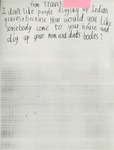
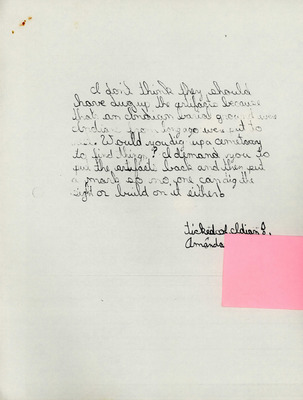
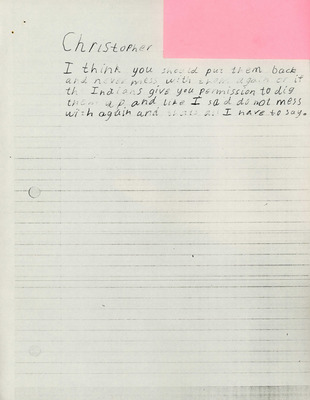
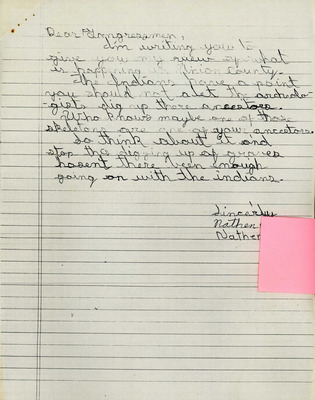
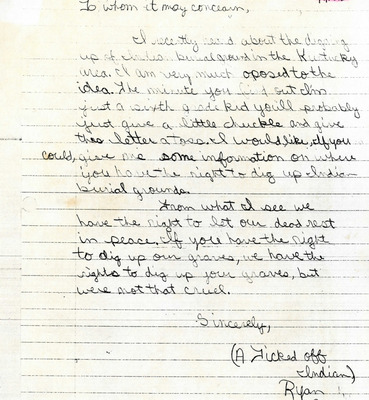
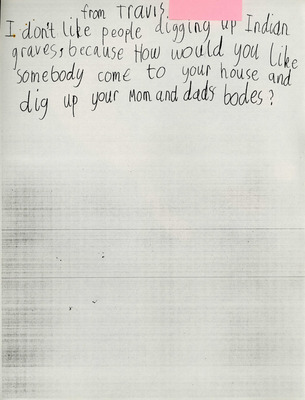
Letter from Travis to Congress
Travis
This handwritten letter, circa 1988, from a student to members of Congress, is regarding the Union County, Kentucky, grave desecration. This is one of dozens of similar letters sent to Congress as part of a campaign to influence tougher legislation on the looting of burial sites.
-
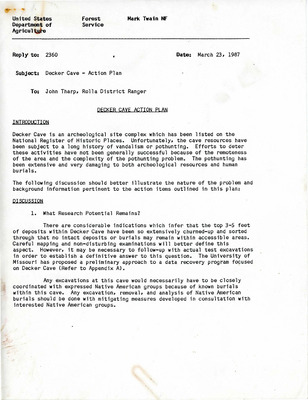
Decker Cave Action Plan, March 23, 1987
Walter E. Allen
This 20-page typed document consists of an action plan sent to District Ranger John Tharp from archeologist Walter E. Allen on March 23, 1987 as well as supplementary materials about Decker Cave. The plan details the history of vandalism and pothunting at the site, including the disturbance of American Indian burials. It also explores the potential for further archeological exploration of the cave in coordination with concerned American Indian groups and provides a plan to deter additional looting of the site. Supplemental materials include a discussion with the University of Missouri Archeological Department, a review of literature, and maps of the area.
-
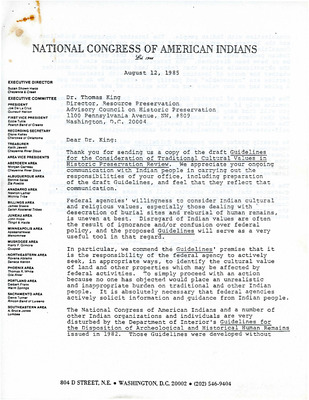
Letter from Suzan Shown Harjo to Thomas King, August 12, 1985
Suzan Shown Harjo
This typed letter from Suzan Shown Harjo, Executive Director of the National Congress of American Indians, was sent to Dr. Thomas King, Director of Resource Preservation for the Advisory Council on Historic Preservation, on August 12, 1985. Harjo praises the new draft Guidelines for the Consideration of Traditional Cultural Values in Historic Preservation Review because they promote active consultation with American Indians before grave sites are disturbed and favor reburial of remains over perceived scientific value. She contrasts the draft Guidelines with those of the U.S. Department of the Interior, which heavily favor the self-interests of archeologists and anthropologists.
-
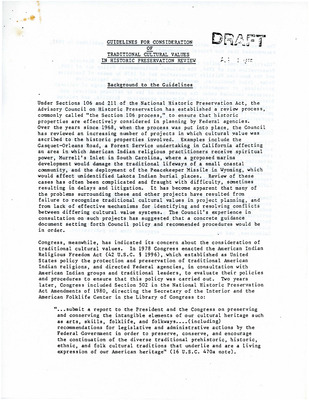
Draft Guidelines for Consideration of Traditional Cultural Values in Historic Preservation Review
Advisory Council on Historic Preservation
This 21-page typed document is a draft of Guidelines for the Consideration of Traditional Cultural Values in Historic Preservation Review, dated August 1, 1985. The document outlines the Historic Preservation Advisory Council's policies and procedures concerning project planning for historic properties, taking into account the traditional cultural values that may be impacted by such projects. It provides background on the American Indian Religious Freedom Act and contains an appendix dealing with the treatment of human remains.
-
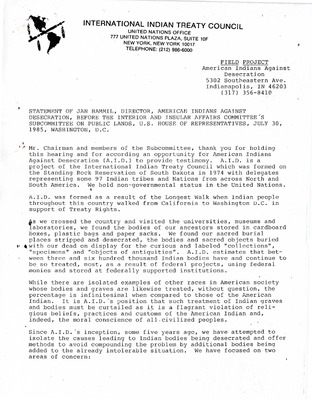
Statement of the Director, American Indians Against Desecration, July 30, 1985
Jan Hammil
This 4-page typed document is a statement from the Director of American Indians Against Desecration, Jan Hammil, speaking before the United States House of Representatives on July 30, 1985. Hammil provides a history of the AID organization as a result of the Longest Walk, when the bodies of ancestors were discovered in museums and universities across the United States. Hammil expresses the need for a federal policy to avoid significant archaeological sites that incorporate Indian burial sites. She also advocates for the consideration of traditional cultural values when organizing archaeological digs, referencing the American Indian Freedom of Religion Act and the U.S. Constitution. She criticizes the outdated policies of the Office of Surface Mining and the Department of the Interior.
-
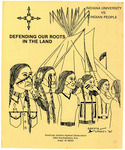
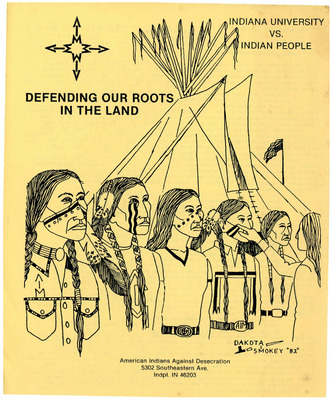
Indiana University vs. Indian People: Defending Our Roots in the Land
Jan Hammil
This 4-page typed press release titled "Defending our Roots in the Land" was issued by American Indians Against Desecration circa November 1983. It describes the history of the founding of AID as a result of the Longest Walk, when Indians discovered the remains of their ancestors housed in universities, laboratories and museums across the United States. It also details the conflict between the Glenn Black Laboratory of Archeology at Indiana University and members of AID who were denied access to human remains stored there. A prayer vigil and four days of fasting are planned in protest.
-
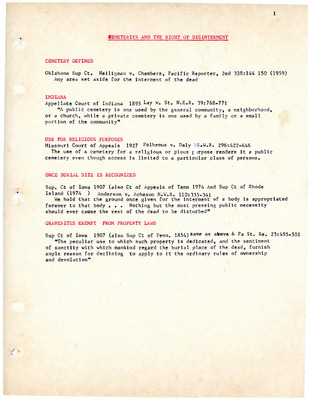
Notes on Federal and State Laws Pertaining to Grave Desecration and Excavation of Remains
Unknown
These sixteen pages of typed notes were compiled circa 1979. They document federal and state laws and definitions pertaining to cemeteries, disinterment, removal of remains and archeological excavation. Also noted are laws dealing with historic preservation, American Indian religious freedom and right to privacy.
-
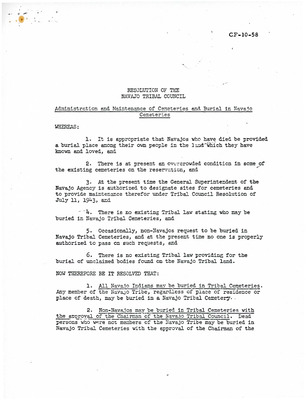
Resolution of the Navajo Tribal Council: Administration and Maintenance of Cemeteries and Burial in Navajo Cemeteries, February 12, 1958
Paul Jones
This three-page typed document is a resolution of the Navajo Tribal Council on Administration and Maintenance of Cemeteries and Burial in Navajo Cemeteries approved on February 12, 1958. It addresses issues such as overcrowding and who is allowed to be buried within Navajo cemeteries. An advisory committee was created to designate sites for cemeteries and provide for their beautification and safeguarding.