
American Indian Movement and Activism
This collection contains digital representations of select documents from the archives of Lenape Elder John Thomas of the Delaware Tribe of Indians. These objects pertain to activism and the American Indian Movement and relate to topics such as self-rule, treaty rights, education, prisons, natural resources, environmental activism and genocide. Items are on loan to Ursinus College as part of the Welcome Home Project.
Special thanks to Ursinus College students Katherine Slater, Class of 2026, and Seamus Clune, Class of 2027, for their assistance with organization, research, digitization and description of these items.
-
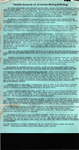
Health Hazards of Uranium Mining & Milling
Black Hills Alliance
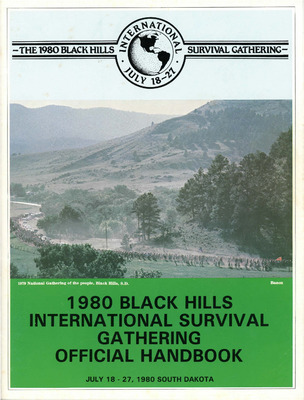
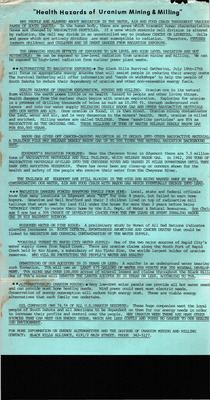
This report, distributed by the Black Hills Alliance of South Dakota, provides information about the dangers posed by uranium mining and milling including contaminated water, cancer risks from radon gas and dewatering of aquifers. It lists alternative sources of power such as wind and solar panels and notes that the Black Hills Survival Gathering will offer information and workshops to help people reduce their dependency on non-renewable energy sources.
-
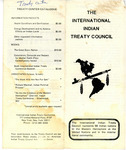
The International Indian Treaty Council Pamphlet
International Indian Treaty Council
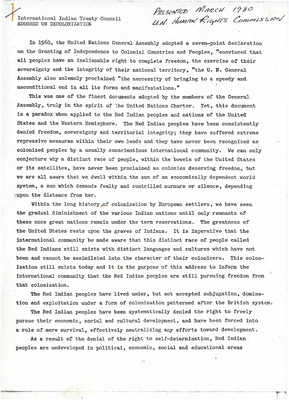
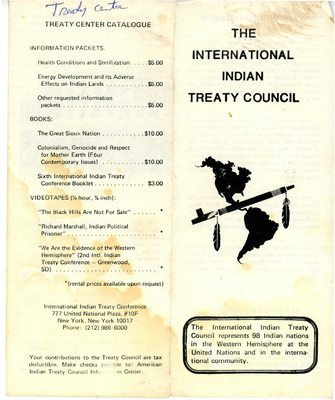
This pamphlet, published by the International Indian Treaty Council circa 1980, provides information about the history and founding of the organization which represents 98 Indian nations in the Western Hemisphere at the United Nations and in the international community. It describes the organization's efforts at the United Nations, special projects and current activities. It also provides information about affiliated organizations and a catalogue of available publications.
-
Dick Marshall New Trial Petition Form
Dick Marshall Defense Group
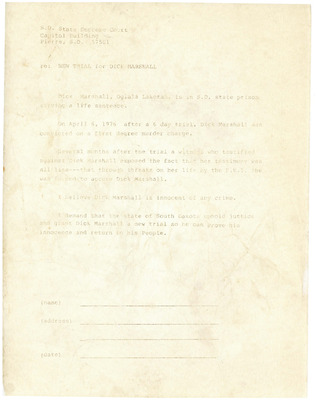
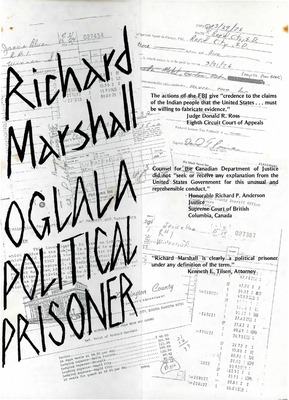
This one-page typed document, circa 1980, is a petition to the South Dakota State Supreme Court for Dick Marshall to receive a new trial. Dick Marshall, an Oglala Lakotah, was imprisoned on a charge of first-degree murder, but later a witness retracted her original testimony, stating she was pressured to accuse Marshall by the FBI. This petition proclaims the innocence of Marshall and demands a retrial.
-
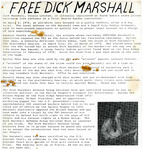
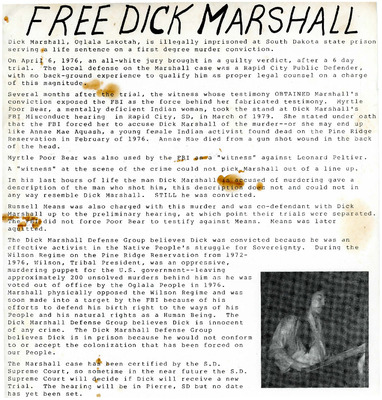
Free Dick Marshall Flyer
Dick Marshall Defense Group
This typed flyer, circa 1980, was produced by the Dick Marshall Defense Group. It provides details and background on the case, stating that Dick Marshall was wrongfully convicted of first-degree murder because of his activism at Pine Ridge Reservation in South Dakota from 1972-1976, making him a target of the federal government. It encourages people to donate to the defense fund and participate in a letter-writing campaign demanding a new trial.
-
Iraq Lecture Text for the Gathering of International Liberation Movements, 1980
Students in the Line of the Imam
This typed five-page Iraqi lecture text was given at the Gathering of World Liberation Movements held in Tehran, Iran, from January 3rd to 9th, 1980. It expresses solidarity and support for the Islamic Revolution in Iran, the Imam Khomeini and the Iranian Moslem Students. The speech condemns the actions of the United States and recognizes the constitution prepared by the Iranian Assembly of Experts. It also expresses opposition to the Ba'athist Party in Iraq and urges coordination between Moslem revolutionary movements and the formation of an international Mostazafan Party.
-
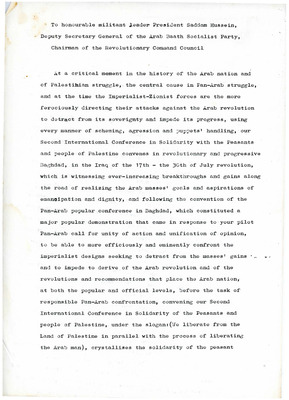
Letter to Saddam Hussein from the Second International Conference in Solidarity with the Peasants and People of Palestine
The Second International Conference in Solidarity with the Peasants and People of Palestine
This two-page typed letter to President Saddam Hussein, Deputy Secretary General of the Arab Ba'ath Socialist Party, from the Second International Conference in Solidarity with the Peasants and People of Palestine promotes the meeting held from March 30th to April 2nd, 1980. It discusses the role of the Conference in liberating Palestine and the Arab people from imperialists and Zionists and declares solidarity with the people of Lebanon. It also notes the value of Hussein's National Declaration of February 8th.
-
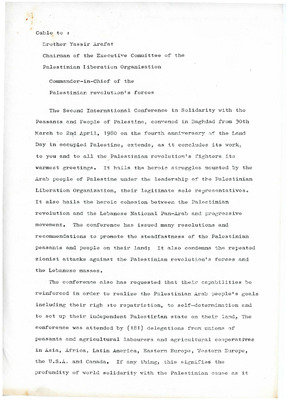
Letter to Yasser Arafat from the Second International Conference in Solidarity with the Peasants and People of Palestine
The Second International Conference In Solidarity with the Peasants and People of Palestine
This two-page typed letter to Yasser Arafat, leader of the PLO, from the Second International Conference in Solidarity with the Peasants and People of Palestine discusses the meeting held from March 30th to April 2nd, 1980. It outlines the history of the Conference and its work to support the Palestinian revolution as well as resolutions to promote Palestinian peasants, their land, and an independent state. It cites international attendance at the conference as an indicator of world-wide support for the movement.
-
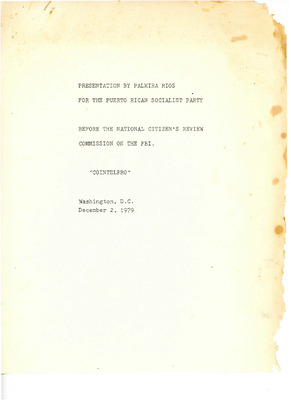
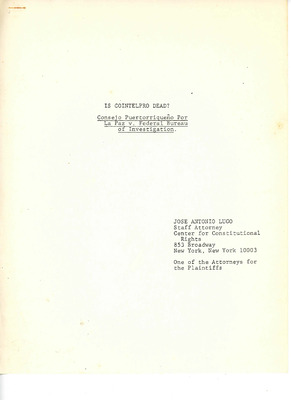
Presentation Before the National Citizen's Review Commission on the FBI: COINTELPRO, December 2, 1979
Palmira Rios
This 12-page typed document is a presentation by Palmira Rios as a representative of the Puerto Rican Socialist Party. The speech discusses the history of the FBI's counterintelligence (COINTELPRO) program and its targets, including the Communist Party, Socialist Worker's Party, the Black Panthers and other groups. It focuses on the various strategies used to disrupt groups seeking independence for Puerto Rico and notes the main objectives of COINTELPRO: Protect national security, prevent violence, and maintain the existing social and political order. The author questions whether these activities have ceased despite the FBI closing down the program.
-
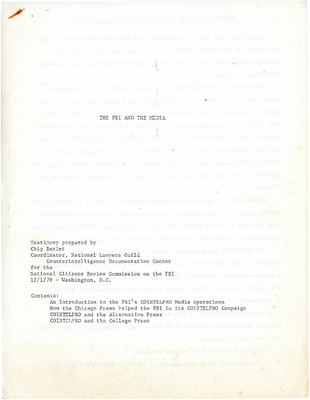
The FBI and the Media
Chip Berlet
This 21-page typed document discusses the impact of the FBI's counterintelligence program (COINTELPRO) on the media and its violations of constitutional rights. It reveals how journalists were fed misinformation by the FBI and details how some journalists willingly worked with the FBI in order to receive tips, knowing that they were participating in counter-intelligence programs. The paper highlights various targets of the program such as the communist party, black nationalist organizations, New Left groups, anti-war groups and college students. It describes how newspapers and television pushed the FBI's narrative and the various methods used to discredit and harass activists.
-
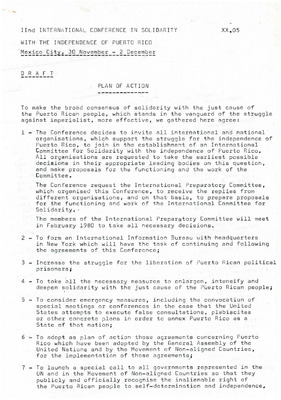
Plan of Action Drafted at the Second International Conference in Solidarity with the Independence of Puerto Rico
Independence for Puerto Rico Conference
This two-page typed draft plan of action was written at the Second International Conference in Solidarity with the Independence of Puerto Rico, held in Mexico City November 30th to December 2nd, 1979. It provides fourteen points of agreement which outline a plan of action for the international community to better support the cause of independence for Puerto Rico. This includes the desire to recognize Puerto Rico as a Caribbean country with ties to the Latin American family of nations.
-
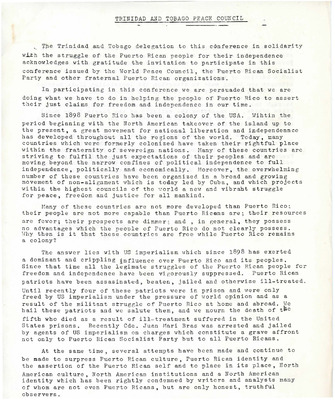
Trinidad and Tobago Peace Council Statement
Executive Committee, Trinidad and Tobago Peace Council
This typed document from the Trinidad and Tobago Peace Council delegation likely originates from the International Conference in Solidarity with the Independence of Puerto Rico, held in Mexico City November 30th to December 2nd, 1979. The statement condemns United States imperialism and expresses support for independence movements in Puerto Rico and other countries around the world. It notes that the "Puerto Rican model of development" is threatening the independence of Trinidad and Tobago and others in the Caribbean.
-
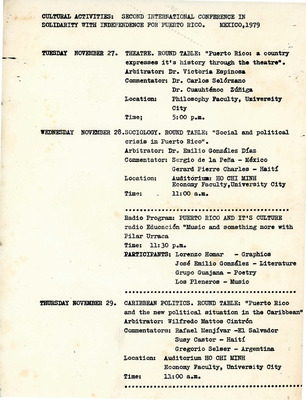
Itinerary of Cultural Activities: Second International Conference in Solidarity with Independence for Puerto Rico, 1979
Independence for Puerto Rico Conference
This two-page typed document is an itinerary of cultural activities at the Second International Conference in Solidarity with Independence for Puerto Rico, held in Mexico City from November 27th to December 2nd, 1979. Events included roundtable discussions on topics related to Puerto Rican culture and politics, a radio program and art exhibitions.
-
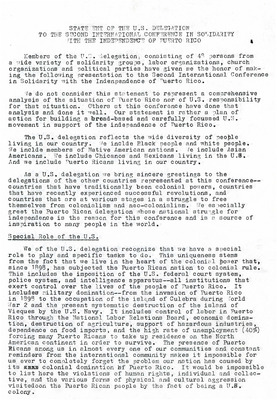
Statement of the U.S. Delegation to the Second International Conference in Solidarity with the Independence of Puerto Rico
United States Delegation Members
This four-page typed document is a statement from the United States delegation presented at the Second International Conference in Solidarity with the Independence of Puerto Rico, held in Mexico City November 30th to December 2nd, 1979. It provides a history of U.S. colonial rule in Puerto Rico and the negative impacts this has had on its people. It also discusses the role of propaganda in the U.S. which has kept many ignorant of U.S. imperialism and states the importance of educating the American people.
The document may be incomplete.
-
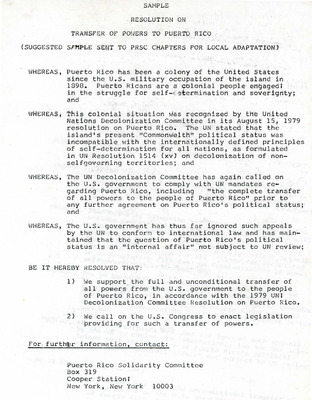
Sample Resolution on Transfer of Powers to Puerto Rico
Puerto Rico Solidarity Committee
This two-page typed document is a sample resolution on the Transfer of Powers to Puerto Rico. The document outlines the United Nations resolution of August 15, 1979 that calls for decolonization of non self-governing territories and calls on the United States Congress to enact legislation to transfer power to the people of Puerto Rico. It also lists chapters and contact information for the Puerto Rico Solidarity Committee.
-
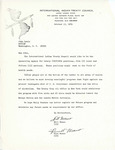
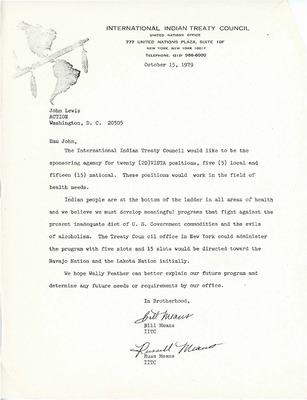
Letter From William and Russell Means to John Lewis, October 15, 1979
Russell Means and William A. Means
This typed letter to associate director of ACTION John Lewis from Bill and Russell Means, on behalf of the International Indian Treaty Council, requests the sponsorship of twenty VISTA positions to address health concerns and alcoholism among the Navajo and Lakota Nations. It notes that Wally Feather may be able to provide additional information about this program.
-
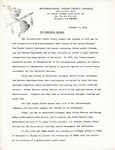
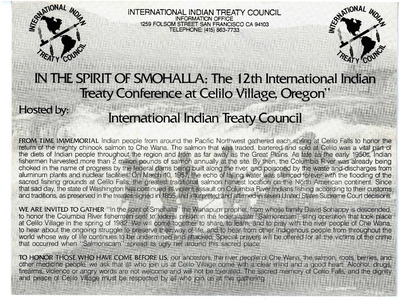
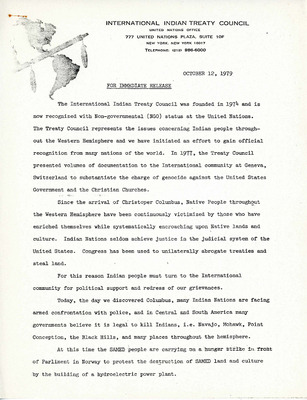
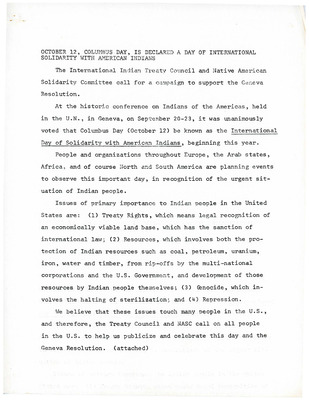
International Indian Treaty Council News Release, October 12, 1979
International Indian Treaty Council
This press release from the International Indian Treaty Council provides a brief history of the founding and function of the Council and its recognition by the United Nations. It discusses how Indigenous people must turn to the international community for political support to help address grievances and lists the plights of oppressed people around the world, including South America, Norway and Palestine.
-
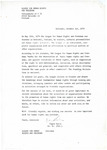
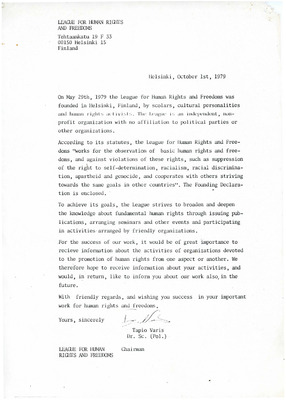
Letter from the League for Human Rights and Freedoms, October 1, 1979
Tapio Varis
This October 1st, 1979 letter from the Chairman of the League for Human Rights and Freedoms, Tapio Varis, provides a history of the League and its goals, which are to cooperate with other nations in the fight against oppression, racism, apartheid and genocide. The letter outlines its methods for distributing information and asks like-minded organizations to share their strategies in the promotion of basic human rights.
-
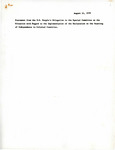
Statement from the U.S. People's Delegation to the Special Committee on the Situation with Regard to the Implementation of the Declaration on the Granting of Independence to Colonial Countries, August 14, 1979
United States People's Delegation
This typed nine-page document contains a statement from the U.S. People's Delegation presented at a session of the Decolonization Committee of the United Nations. The statement describes the history of the United States' exploitation of Puerto Rico and the methods it has used to make Puerto Rico completely dependent on the United States for survival. It urges support for measures that would grant power to the Puerto Rican people to determine their own future and provides a list of people and organizations who endorse the statement.
-
Native Women’s March Position Paper to the Government of Canada, July 20, 1979
Tobique First Nation Women
This ten-page typed Position Paper to the Government of Canada was presented by a group of Tobique First Nation women who organized a march from the Oka Reserve in Quebec to Ottawa. The paper lists many problems and recommendations for solutions to issues facing indigenous women and children including housing and health. Criticisms of the amendment to the Indian Act of 1951 also focus on the retention of Indian status and rights which are often unknowingly given up by women.
-
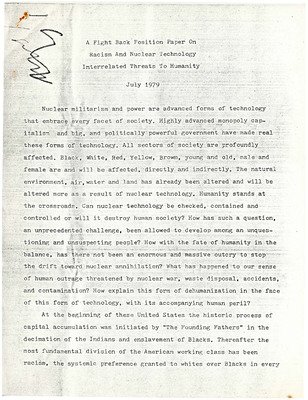
A Fight Back Position Paper on Racism and Nuclear Technology: Interrelated Threats to Humanity
Fight Back
This 5-page photocopied paper examines how uranium mining and the development of nuclear technology is impacting Native American communities. It claims that capitalism and racism continue to dehumanize the population of the United States and suggests that an educational and political campaign is needed to combat racism and unite workers.
-
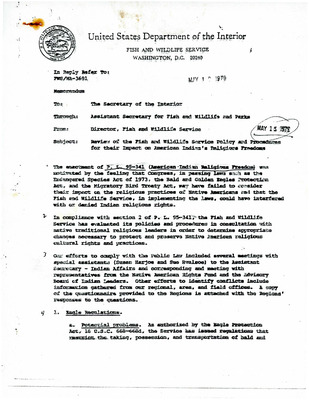
Letter from Lynn Adams Greenwalt to Cecil Andrus, May 15, 1979
Lynn Adams Greenwalt
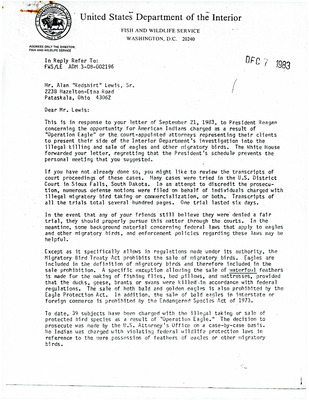
This typed eight-page letter to the U.S. Secretary of the Interior from the Director of the Fish and Wildlife Service was sent on May 15, 1979. The letter reviews the impact of Fish and Wildlife Service policies on Native American religious practices in light of the passage of the American Indian Religious Freedom Act of 1978. It examines conflicts with bald and golden eagle regulations, migratory bird regulations, and endangered species regulations and outlines exceptions and steps taken to comply with the Act such as religious permits and the establishment of depositories for eagle parts.
-
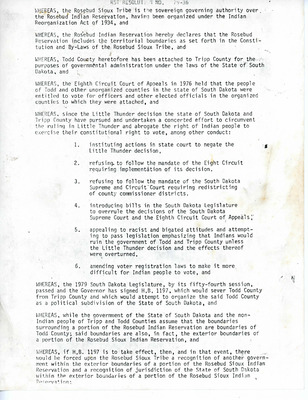
Rosebud Sioux Tribe Resolution No. 79-36
Edward Driving Hawk and John King Jr.
This typed two-page Rosebud Sioux Tribe resolution from 1979 outlines the history of governmental administration of the Tribe and its territorial boundaries in South Dakota. It alleges that Indian voting rights, as established in Little Thunder v. the State of South Dakota, are being undermined. The resolution demands that the United States Department of Justice and the Bureau of Indian Affairs investigate these matters.
-
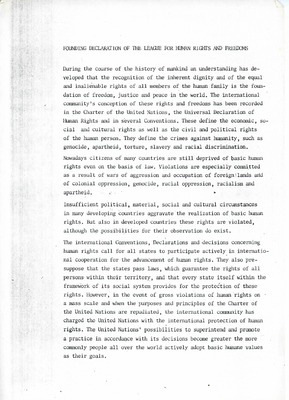
Founding Declaration of the League for Human Rights and Freedoms
League for Human Rights and Freedoms
This typed two-page document, circa 1979, contains the Founding Declaration of the League for Human Rights and Freedoms based in Finland. It discusses the historical development of the recognition of basic human rights by organizations such as the United Nations and defines crimes against humanity that require intervention. It calls for cooperation with other countries striving for the same goals.
-
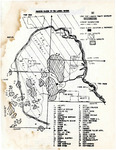
Map and Timeline of Uranium Claims in the Lakota Nation
Unknown
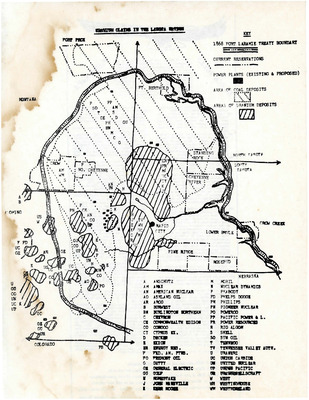
This two-page typed document, circa 1979, provides a map of uranium and coal deposits, as well as existing and proposed power plants in the Lakota Nation in South Dakota. It also presents a timeline of the struggle between the Lakota people and the United States in the Black Hills region from 1856 to 1979.
-
Sisseton-Wahpeton Sioux Tribe of the Lake Traverse Reservation Tribal Council Resolution No. 78-74
Clayton Adams and Jerry Flute
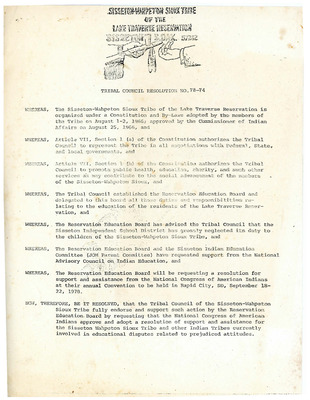
This original three-page typed document introduces Tribal Council Resolution 78-74 of the Sisseton Wahpeton Sioux Tribe of the Lake Traverse Reservation and charges that the Sisseton Independent School District is failing to properly educate Indian children due to prejudicial issues. It supports the Reservation Education Board in its decision to request assistance and support from the National Advisory Council on Indian Education and the National Congress of American Indians.